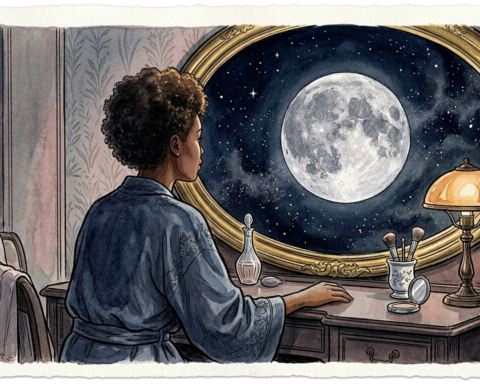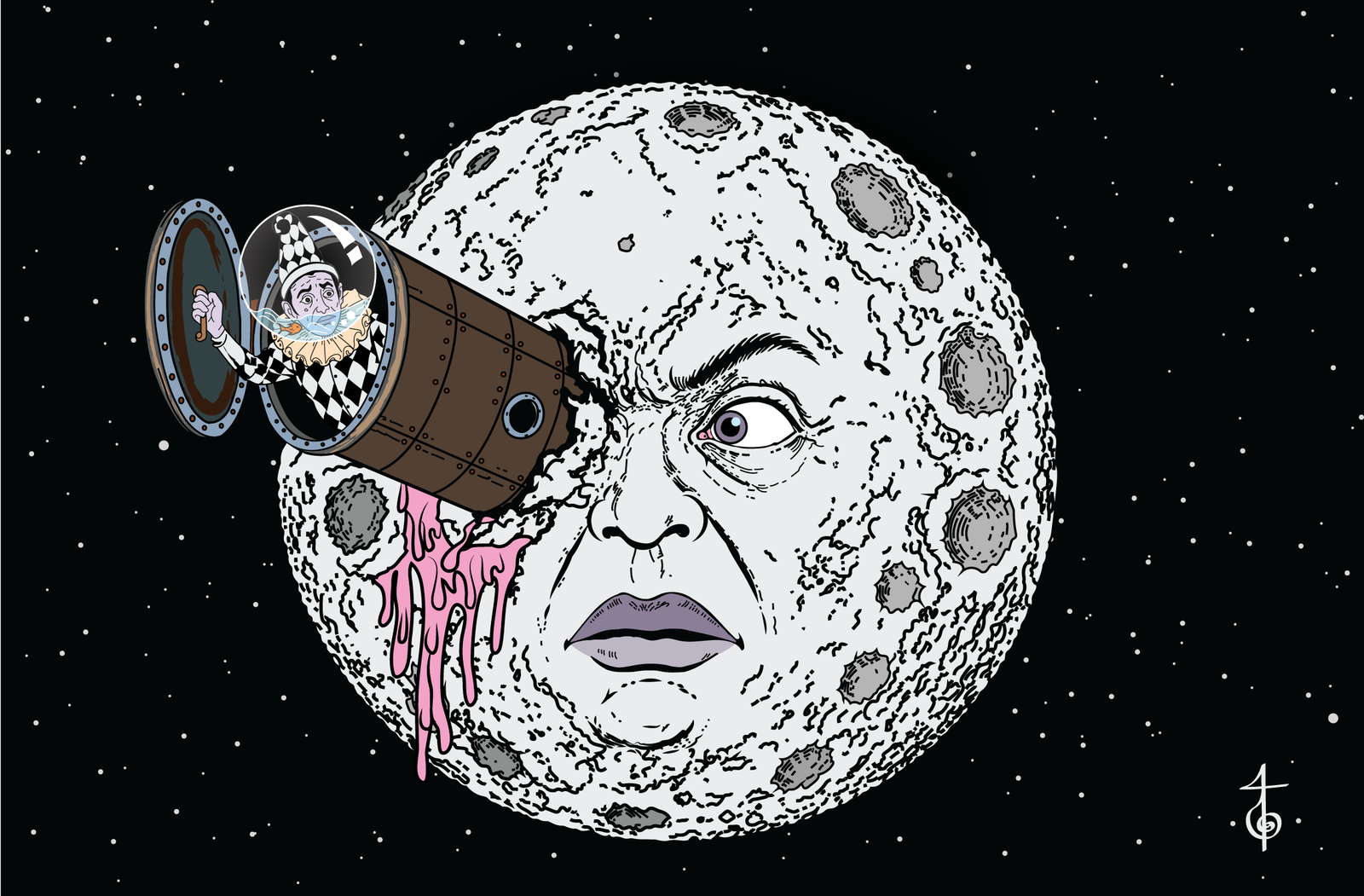

The moon is the fastest moving object in our sky, a silver blur that manages to dictate the emotional tides of our lives without ever breaking its silence. Divination by the moon, or selenomancy, is a functional, rhythmic system for making sense of a chaotic world. It turns the night sky into a ticking clock, a mirror, and a map. It is, in many ways, the original predigital GPS for the soul.
The Eight-Phase Performance
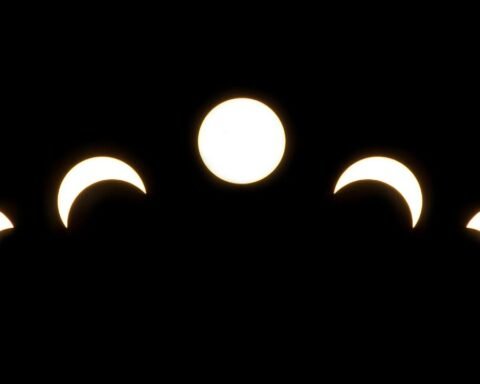
We often treat the lunar cycle as a gentle backdrop or scenic wallpaper for our evening commutes. In reality, it is a reliable, luminous mechanism. Each phase demands a different posture:
- New Moon: The absolute zero of the cycle. It is a moment of intellectual hesitation where the “void” is not empty, but heavy with unformed intent.
- Waxing Crescent: The first shard of light. This period represents the struggle of turning a thought into a physical reality.
- First Quarter: A sharp, 90° angle. This phase acts as a spiritual pivot point, demanding a decision or a confrontation.
- Waxing Gibbous: The stage of high-speed editing. It is about refinement and the uncomfortable patience required before a climax.
- Full Moon: Total illumination. In divination, this is the moment of the Great Reveal. If you have been hiding a secret from yourself, the light acts as a fluorescent bulb in a dark hallway.
- Waning Gibbous: The harvest of the psyche. It is the time to share what was learned during the peak.
- Last Quarter: The final audit. This is a period of “devastating observation,” where you must decide what is worth carrying into the next cycle and what is dead weight.
- Balsamic (Dark) Moon: The period of psychic vision. Before the light returns, the intuition is at its most grit-stained and honest. One should note that the Dark Moon is the final sliver of the old cycle, representing release and “ending,” whereas the New Moon is the precise moment of conjunction that signals the “beginning.”
Celestial Unemployment: The Void-of-Course
Perhaps the most nuanced element of this practice is the Void-of-Course moon. This occurs when the moon has finished its final major aspect to another planet but hasn’t yet entered the next zodiac sign. It is a period of celestial unemployment. Tradition dictates that nothing of importance started during this time will take root. Contracts will stall. Emails will vanish into the ether. In our hyper-productive culture, the Void is a built-in excuse for human inertia: a cosmic permission slip to do absolutely nothing.
Perigee, Apogee, and the Wild Cards
Size, it appears, matters to the diviner. A Supermoon (perigee) acts as an exclamation point: it amplifies emotions and brings hidden issues to a boiling point. Conversely, a Micromoon (apogee) is the moon at its furthest point: distant, thin, and quiet. If a Supermoon is a shout, a Micromoon is a whisper, suggesting that the answers you seek require significant effort to hear over the noise of daily life.
Then there are Eclipses, the wild cards of the lunar deck. A lunar eclipse is a “course correction” from the universe. It is a moment when the lights are turned off and back on again, usually revealing that the room looks much different than we imagined. One does not “manifest” during an eclipse: one simply survives the reveal.
The Zodiac Transit
Beyond the phase, a practitioner must look at the moon’s current astrological placement. The moon moves through a new sign roughly every 2.5 days, shifting the collective emotional weather. A Moon in Aries creates an impulsive, punchy atmosphere where divination yields blunt, immediate answers. Conversely, a Moon in Scorpio pulls the seeker into the basement of the subconscious, demanding a confrontation with secrets and “dark” truths.
Tools of Timing: Oracles and Spreads
For the seer who prefers a tangible interface, moon-themed oracle cards or specialized lunar runes offer a sophisticated way to map out a timeline. Unlike standard decks, these tools often feature the specific phase of the moon on each card. Drawing a “First Quarter” card in response to a question about a project doesn’t just describe the energy (conflict, action), it provides a literal deadline. It suggests the situation will reach its next critical stage in approximately seven days, or when the moon next reaches that phase. However, one might find that the event in question manifests in a completely different moon cycle: it is essential to use intuition, as discerning exact timing in divination remains a notoriously tricky endeavor for most.
Furthermore, moon-cycle tarot spreads allow a practitioner to track how a situation is evolving in real-time. While a typical spread might involve drawing one card for each of the four primary quarters, the ambitious seeker can perform a comprehensive eight-card spread to mirror every phase of the moon. This creates a detailed narrative arc, showing where the energy is likely to peak and where it will eventually dissolve. It turns a static reading into a living, breathing forecast that moves with the sky.
Methods of the Modern Seer
To bridge the gap between high-brow mysticism and the mundanity of daily life, several methods remain effective:
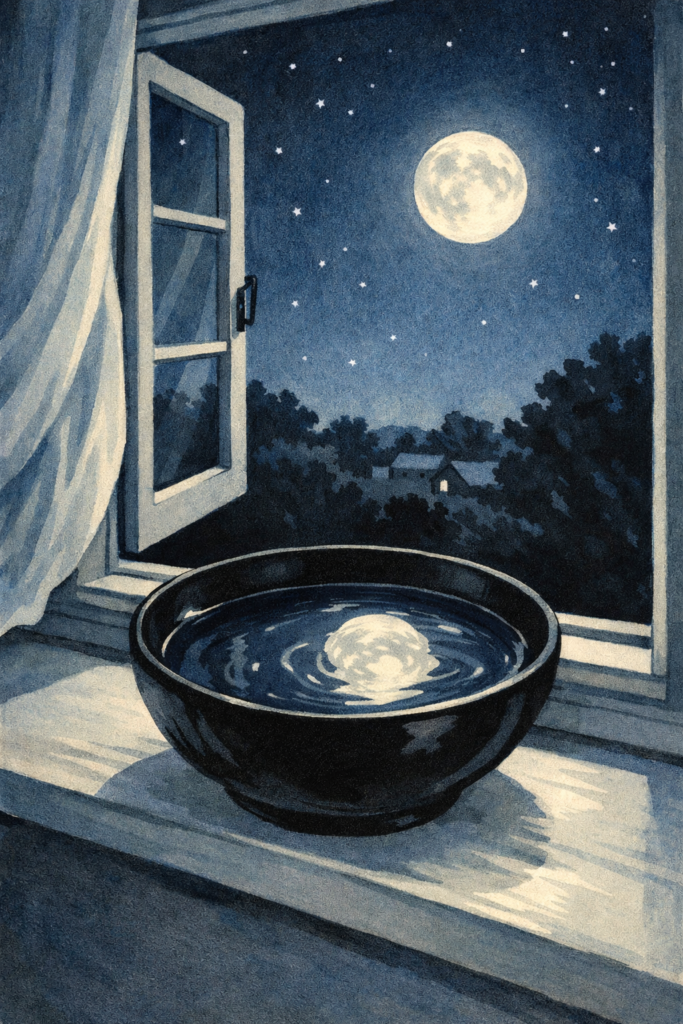
- Hydromancy (Scrying): Place a silver or dark bowl of water on a windowsill to catch the lunar reflection. You aren’t looking at the water: you are looking through it. It serves as a low-tech sensory deprivation tank, allowing the mind to project symbols onto the surface.
- Moon Scanning: This involves gazing at the topography of the moon until the shadows begin to shift into recognizable shapes.
- Lunar Herbs and Water: Incorporating “moon-ruled” plants like mugwort or jasmine into a ritual space. Many also create Moon Water by leaving a jar of pure water under the light of a specific phase. This is used to wash one’s divination tools or the “third eye” area to tune the physical body to the lunar frequency before a reading.
- Lunar Deities: To ground the reading, practitioners often call in archetypes that function as intellectual scaffolding. One might invoke the Greek Artemis or Roman Diana for fierce focus, or Hecate to navigate the “crossroads” of a difficult choice. Others seek the structural balance of the Dahomey goddess Mawu, the Japanese Tsukuyomi, or the Aztec Coyolxauhqui, whose fragmented form speaks to the beauty in the incomplete. Whether calling upon the Greek Selene for clarity, the Egyptian Thoth for measured wisdom, or the Hindu Chandra for emotional depth, these figures provide the narrative lens through which the light is filtered.
Historical Omen and the Babylonian Disaster Siren
Some of our ancestors viewed this light with genuine dread. In the 16th century, a halo around the moon was was an omen predicting civil unrest. Babylonian shadow-watching was even more visceral: court astrologers read the direction of an eclipse shadow across the moon’s quadrants to predict which specific territory or royal heir was in danger. It was a high-stakes, geopolitical disaster siren.
This lunar connection extended to oneiromancy, or dream incubation. Practitioners would sleep in moonlit gardens after ritual washing, hoping for a “moon-sent” prophetic dream. The moon was seen as a conduit that speaks when our conscious defenses are down. It signaled that the thin veneer of civilization was about to peel back, revealing imperfections underneath.
Divination is, at its core, the sophisticated act of paying attention. We look at the moon not because it holds a magic wand, but because it provides a consistent witness to our own inconsistency. It reminds us that even when we are in the dark, the cycle is still moving.