
The silver lamp of the night does not merely hang in the void; it breathes upon us. To look upon the moon is to witness a celestial metronome, a heavy, silent neighbor whose rhythmic pull dictates the very pulse of our terrestrial home. While we may shutter our windows and bathe our rooms in the sterile, blue hum of LED screens, we remain tethered to the ancient, liquid architecture of the sky.
We are, quite inconveniently, a collection of wandering oceans. It is a biological truth that sits uncomfortably alongside our modern desire to be solid, autonomous beings. If the moon can heave the vast, salt-heavy Pacific toward the shore, the logic of the mystic suggests it must surely ruffle the fluids within the human skull. Scientists, naturally, maintain a measured skepticism, noting that the gravitational tug on a single body is less than the whisper of a passing truck.
Yet, recent data suggests the moon may be influencing us through a different, more ethereal channel: the light itself. In a study published in Science Advances, researchers observed that in the nights leading up to a full moon, the human spirit becomes restless. Across urban sprawls and darkened forests alike, people began their sleep later, their rest shortened by a prehistoric alertness. It appears our internal clocks are not as insulated from the firmament as we would like to believe. We are wired to respond to that specific, reflected glow of an ancient, biological echo of an age when moonlight was the only lantern in a world of shadows.
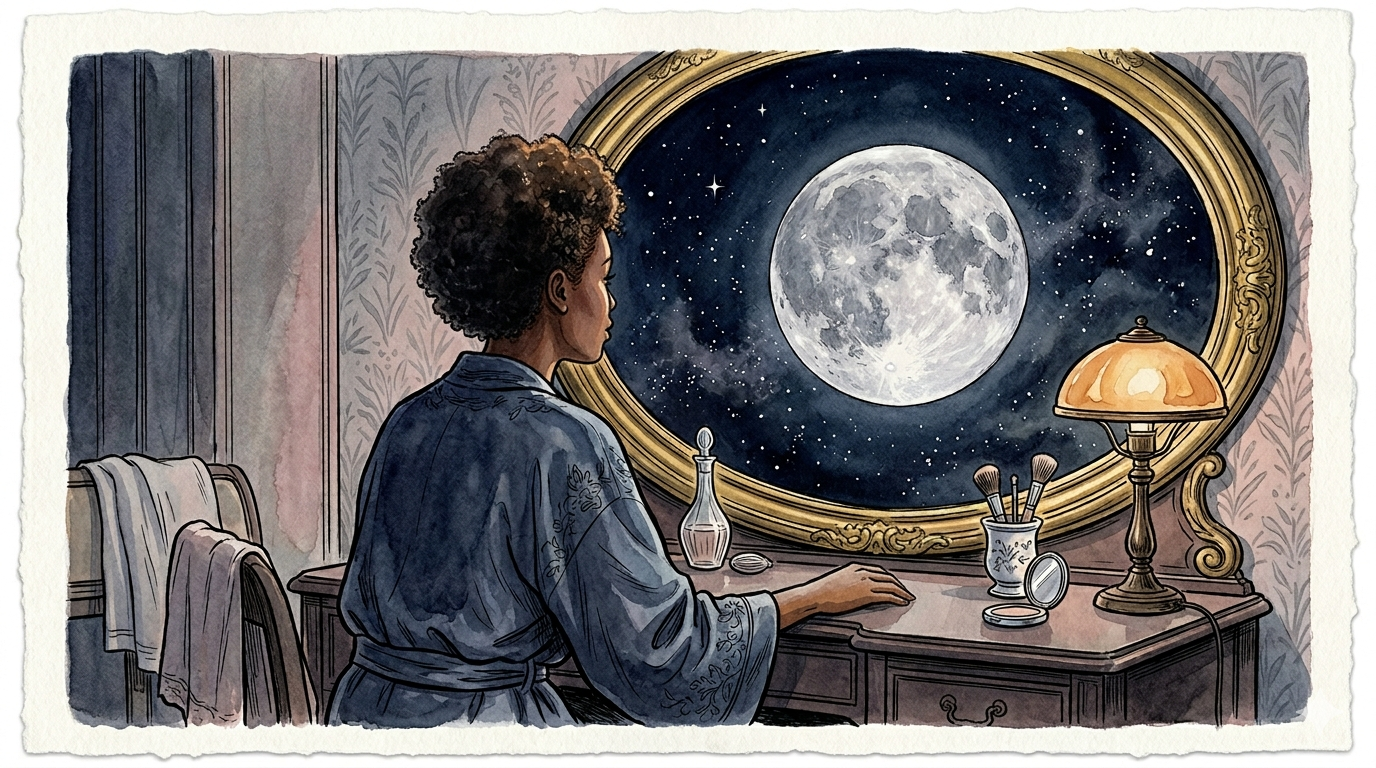
In the esoteric tradition, this connection is less about physical displacement and more about the “astral” body. The moon is the Governor of the Subconscious. When the moon is full, the sun’s light, representing the conscious will, illuminates the most shadowed alcoves of the psyche. This is the “lunacy” of old folklore. It is not that the moon creates madness; rather, it acts as a celestial mirror, reflecting the hidden tempests that were already brewing in the dark.
The movement of the tides is often described as a simple game of tug-of-war, but the reality is a more exquisite, rhythmic distortion. To understand the sea is to understand the tidal bulge.
Gravity is a greedy, possessive force. The moon pulls most intensely on the waters closest to its bosom, stretching the ocean toward the lunar body like a lover’s reach. However, on the exact opposite side of the Earth, a second bulge forms, not because the moon pulls it, but because the moon pulls the Earth itself away from that water. This creates a planet-wide stretching effect, that follows the moon’s transit. As our world rotates through these twin mountains of water, we experience the rhythmic inhale and exhale of the sea.
The sun, though a titan of fire, plays a secondary role in this dance. When the sun, moon, and Earth align during a New or Full moon, we witness the Spring Tides. Here, the gravitational forces stack like layers of heavy silk, creating dramatic, surging highs and profound lows. Conversely, when the moon sits at a right angle to the sun, the Quarter phases, the forces cancel each other out, resulting in the muted, sluggish Neap Tides.
Down on Earth, there is a pragmatic mysticism in the way we treat the soil. Lunar gardening relies on the belief that the earth breathes in sync with the lunar phases. During the waxing moon, the “inhale” of the earth draws moisture upward through the dark loam. This is the season for the ephemeral: the emerald lettuce, the tender spinach, the flowers that bloom with a desperate, frantic beauty. It is a period of outward expansion.
Once the moon begins to wane, the earth “exhales.” The energy retreats into the cool, silent security of the roots. This is when we plant the carrots and the potatoes—the treasures that grow in the dark. It is a lesson in timing that we often fail to apply to our own frantic lives. We try to bloom when we should be grounding; we try to expand when the tide of our own energy is clearly receding. To follow the moon is to avoid the exhaustion of swimming against a current that does not care about our deadlines.
Historically, the moon was seen as a gatekeeper of passages. In Roman myth, Diana was the goddess of the hunt and the moon, a figure of fierce independence who nonetheless presided over the most vulnerable moments of existence: the threshold of birth and the finality of death. Medieval folklore warned against sleeping in direct moonlight, fearing it would induce a permanent, silver melancholy. This fear was a distorted recognition of the moon’s power to disturb the status quo, to pull one out of the mundane and into a more fluid, dangerous territory of the mind.

The tides, too, carry the weight of superstition. In Celtic lore, the “turning of the tide” was a sacred boundary. It was whispered that a soul could only be ushered into this world on a rising tide and could only slip away as the waters retreated, as if the ocean itself were a biological lung, exhaling us into life and inhaling us back into the deep.
It is easy to dismiss the “lunar effect” as a relic of a pre-scientific imagination. Yet, as we map the rhythms of marine life and find subtle, mirrored patterns in human biology, the divide between the laboratory and the altar begins to blur. While we cannot prove the moon “pulls” at our blood with physical force, the statistical shift in our behavior during these gravitational peaks is difficult to dismiss. We are not merely observers of the tide; we are, in a very literal sense, vibrating in sympathy with it.
The moon remains a mirror. Whether it is reflecting the sun’s light onto a midnight garden or reflecting our own hidden anxieties back at us during a sleepless night, it serves as a reminder of our porousness. We are influenced by things we cannot touch. We are moved by a cold rock orbiting a blue planet in a silent vacuum. It is a devastatingly beautiful reality to accept.